

 NinjaCalc
Terminal Blocks

Terminal Blocks
Terminal blocks are a great easy-to-use connection method for signal from mA right up to 10A+. They make it easy to connect (and re-arrange) wires, accept one of the largest ranges of wire sizes, and the standard screw type requires no crimp on the end of the wire. They are also great because they allow the cable itself to be fed through glands and other small orifices, as there is no mating connector permanently mounted onto the end of the cable.
There are different types of terminal blocks:
| Type | Description |
|---|---|
| One piece | These are your standard terminal blocks that are soldered onto PCBs.</td> |
| Feed-through | Rather than connecting to a PCB, these provide mechanical contacts on both sides of the terminal block, allowing wires to be connected together. Popular with mains (household) wiring. |
| Pluggable | These are like on-piece, except that the PCB part and the wire part are plugged into each other, so that they can be separated. |
| Barrier | These provide electrical isolation. |
You can see the push-in terminal blocks I used to connect up all the solenoids for the Luxcity Tonic project in the image below (the green things with numbered stickers and wires coming out of them).
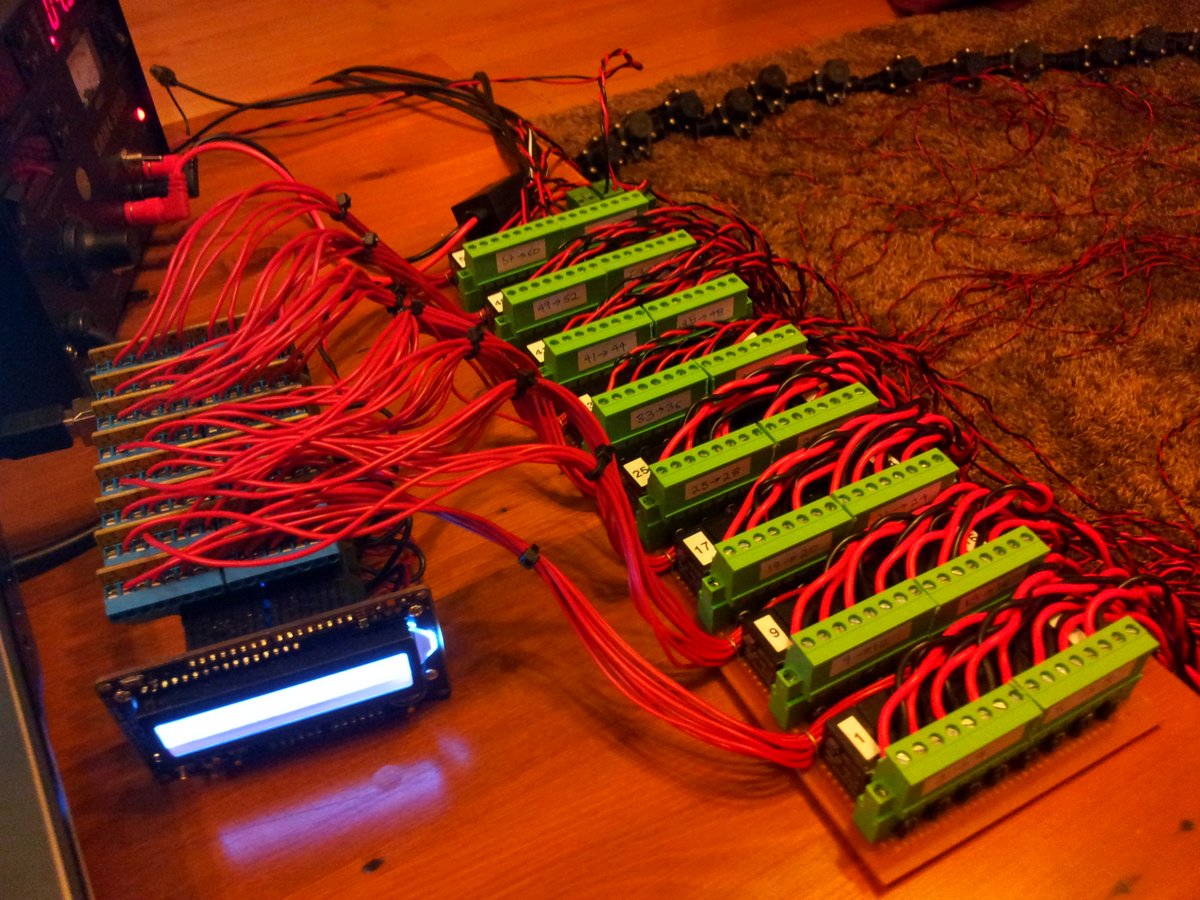
However, because they do not enforce a specific wiring configuration, they are prone to wiring errors, especially if someone else than that who designed the circuit is wiring it up.
Common pitches for terminal blocks are:
| Pitch | Use |
|---|---|
| 2.54mm (100mill) | Imperial pitch used for small wires (16-30AWG). While this is a very common pitch for other connectors, the design of terminal blocks actually makes this result in very small connections, hence larger pitches are more popular. |
| 3.5mm | Common metric pitch. |
| 3.84mm (150mill) | This is a common terminal block imperial pitch. |
| 5.08mm (200mill) | This is a very common imperial pitch. |
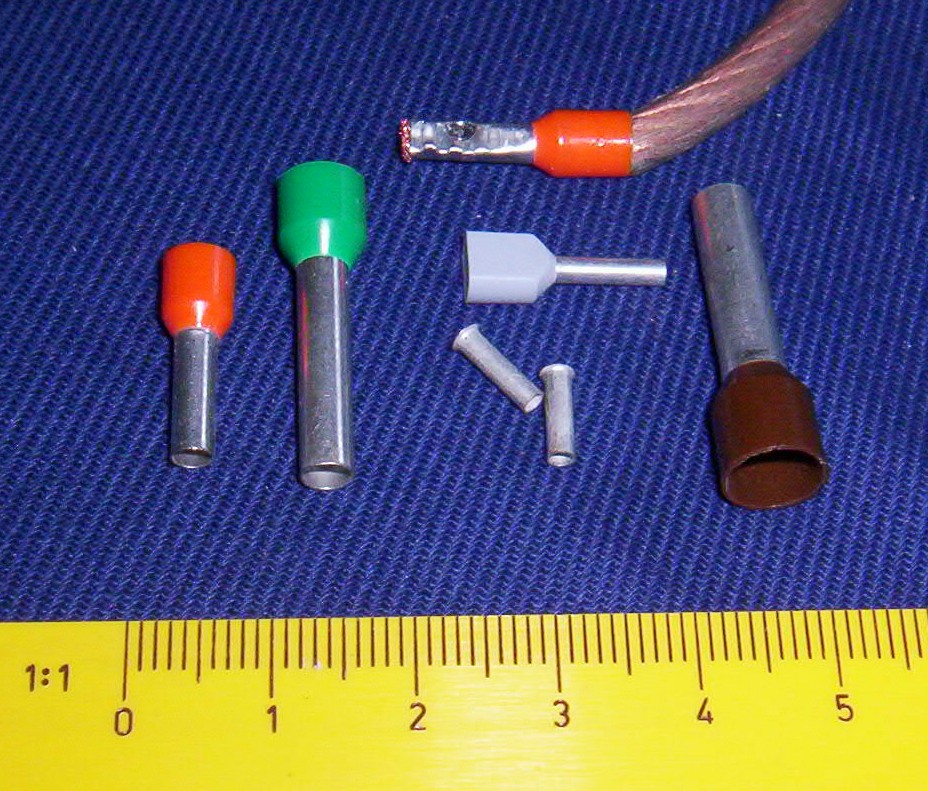
A better way to fix this problem is to use wire ferrules. These are small hollow metal cylinder which just fit over the wire and then crimped onto it, before being inserted into the terminal block. It stops the wires from fraying, and gets rid of the solder creep problem.
Connection Type
Terminal blocks have many different connection types:
Screw
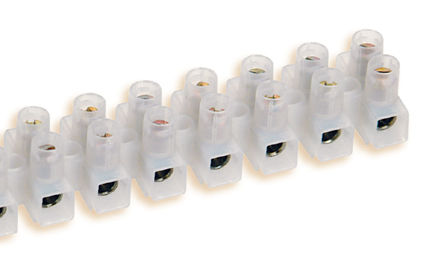
The most basic terminal block connection type. I don’t particularly like this connection style, especially when clamping bare wires (i.e. no wire ferrule), as the screw can pinch and break the individual wire strands, as well as the screw completely missing some/all of the wire strands if they ride up the sides of the metal enclosure. This problem is exasperated when the gauge of the wire is small compared to the size of the terminal block.
Rising Cage
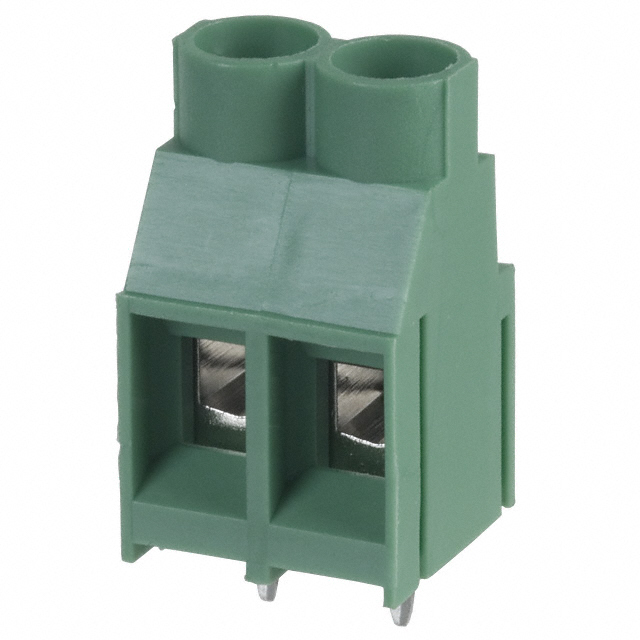
Screw with rising cage clamp is my preferred connection type. This is where the bottom side of a square cage rises up and clamps the wire when you tighten the screw. This does not pinch and break the wire as often as the basic screw connection type terminal block does.
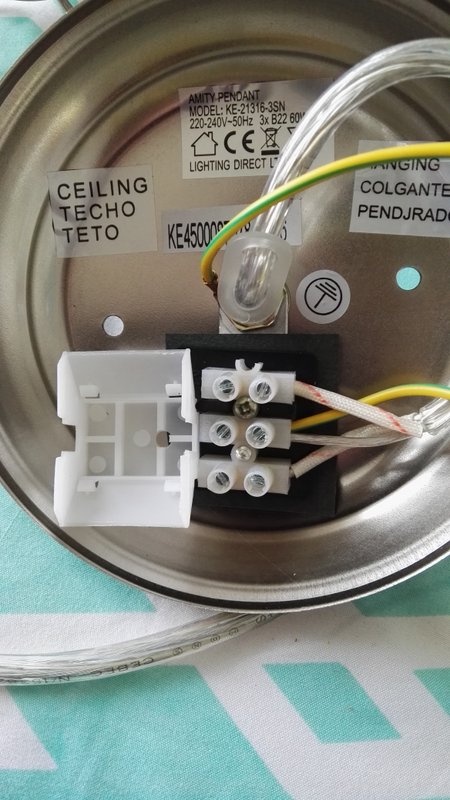
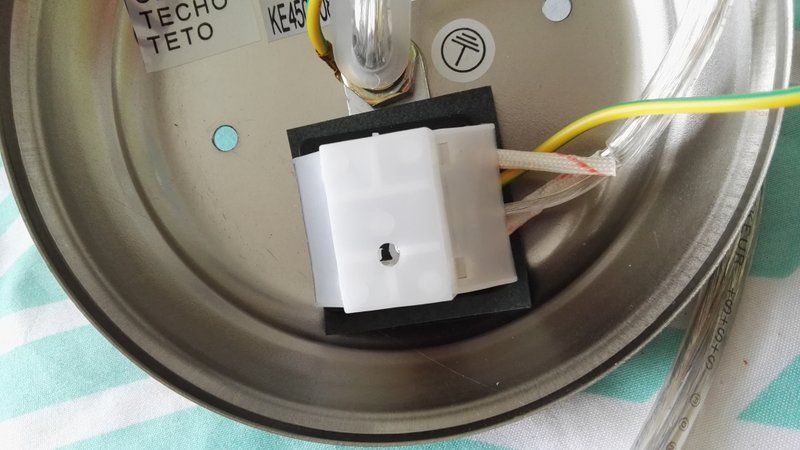
Terminal Block Covers
You can purchase terminal block covers, which give further protection to the wires after they have been fixed into the contacts.
Commonly, they clip onto the top of the terminal block and shield the terminal block from objects approaching from overhead.
Ceramic (Porcelain) Terminal Blocks
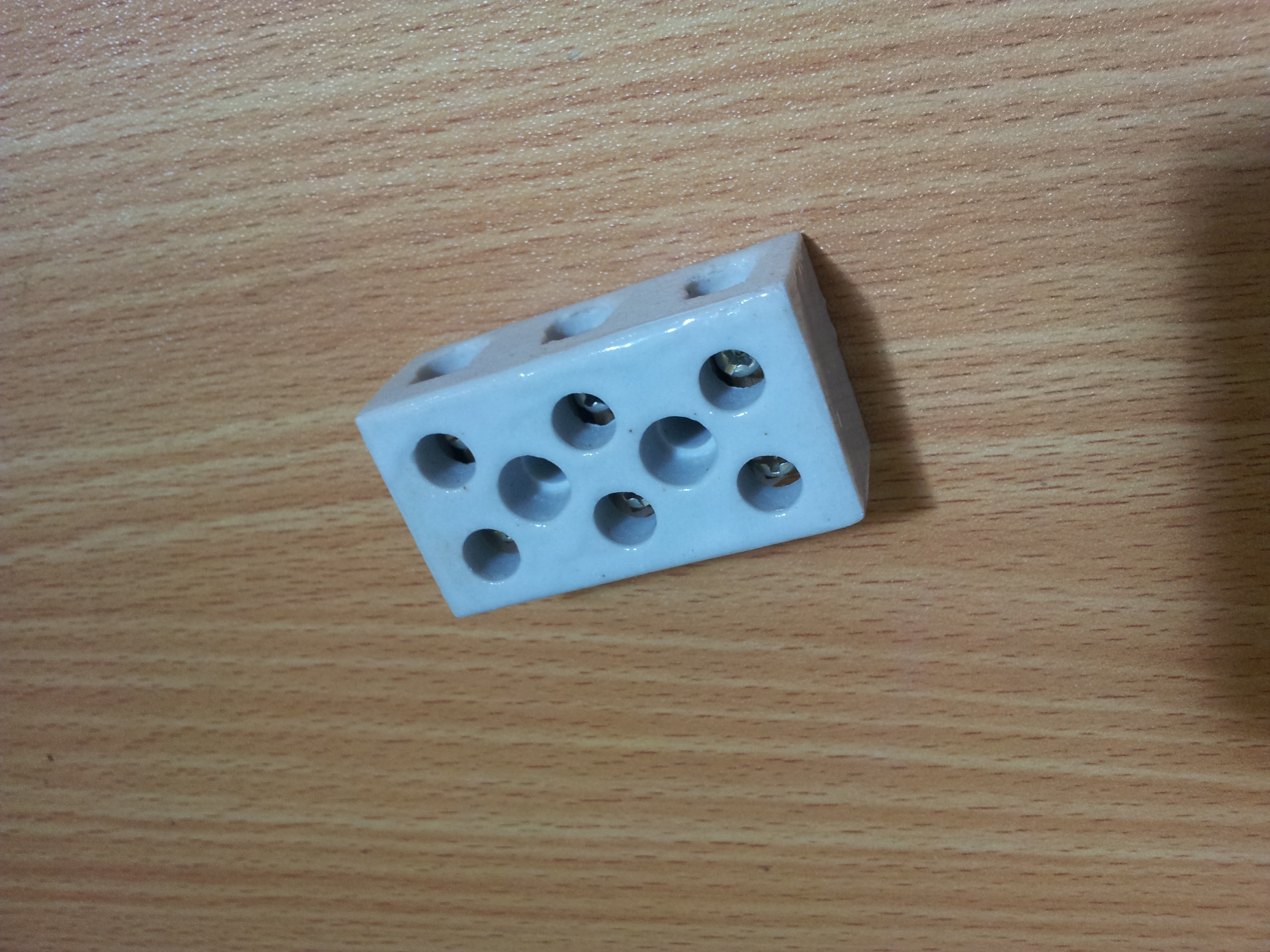
Ceramic (also called porcelain) terminal blocks were used before plastic ones became widely available. They still find a niche in applications where they would be subjected to very high temperatures that would melt plastic. They can typically operate in temperatures of -40° to 650°C. This includes things such as heaters, thermocouple connections, machinery, and many other industrial uses. Steatite is a popular ceramic material used for construction of these types of terminal blocks.
DIN Mounted Terminal Blocks
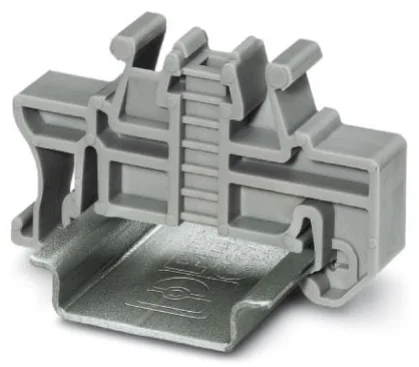
DIN mount terminal blocks are terminal blocks that are designed to be mounted onto a DIN rail. They are typically used in industrial applications such as in control panels/cabinets and switch boards.
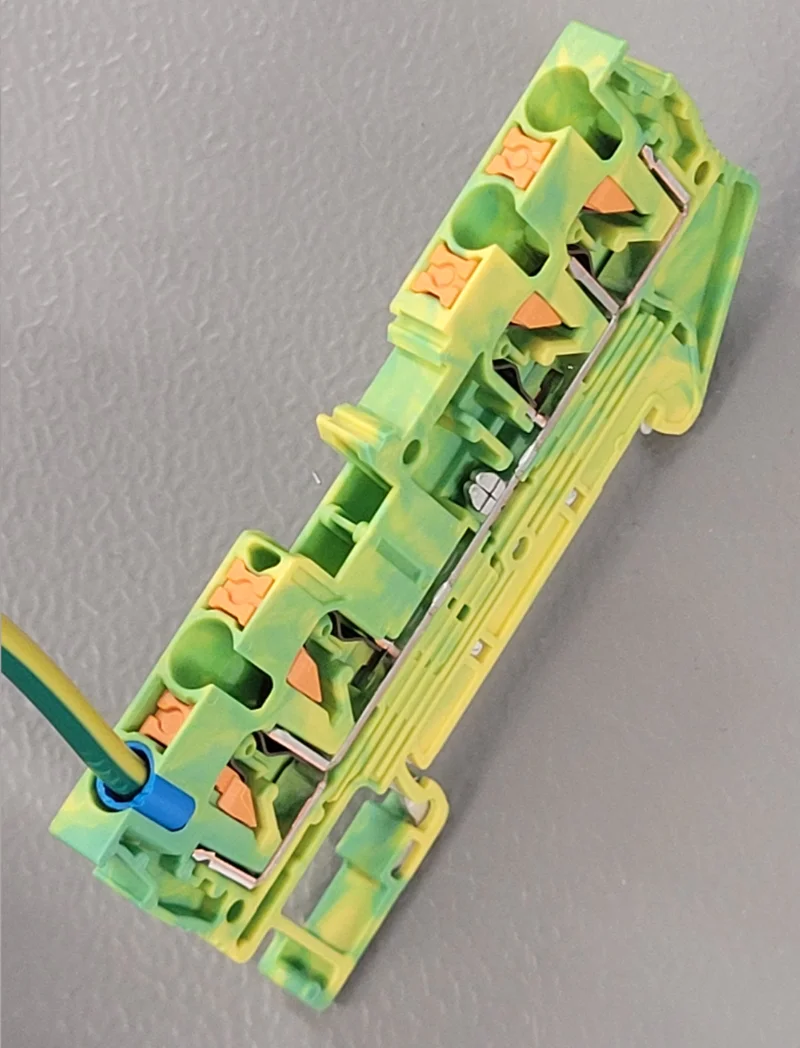
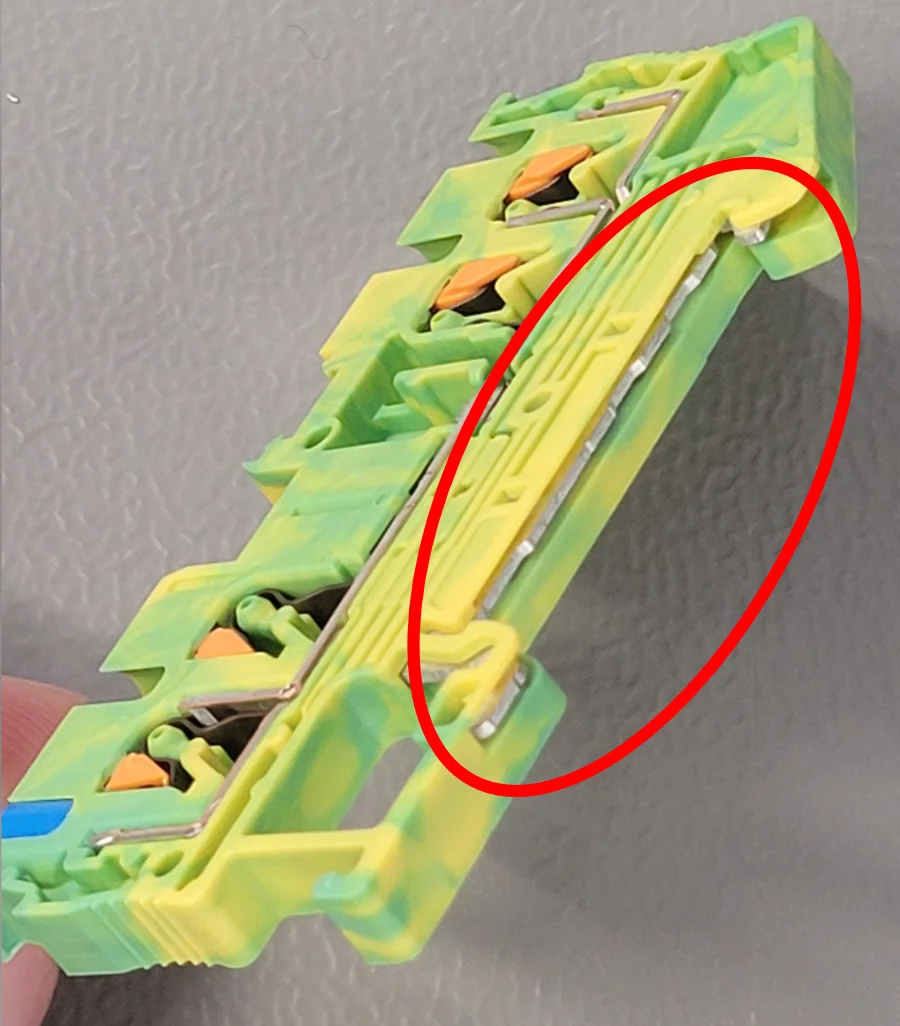
Special Earth Terminal Blocks
There are special earth terminal blocks available that also connect the terminals to the DIN rail. This is a placeholder for the reference: fig-earth-din-mounted-terminal-block-with-din-connection-highlighted shows how the connection to the DIN rail is made. This normally means don’t have to earth the DIN rail mounting plate with a separate lug which is saves time and space.
Examples
Phoenix Contact CLIPLINE Series
The Phoenix Contact CLIPLINE series is a popular series of DIN mount terminal blocks stocked by DigiKey and others.
- CLIPLINE PT: Terminals insert in the top of the terminal block. Useful for horizontally space constrained applications. Not so tidy for wiring compared to terminals that exit out the sides, as the wires can’t directly go into trunking.
- CLIPLINE PTV: Terminals insert in the sides of the terminal block. Tidy compared to vertical entry as the wires can directly go into trunking.
Example products from the CLIPLINE series:
Conta-Clip Terminals
I was not as happy with Conta-Clip terminals compared to the Phoenix Contact CLIPLINE series. It was harder to push ferruled wires into the spring-based terminal blocks, and the comb connectors were not as tidy.